
“Through his painting, Nannini depicts normality as a perceptual threshold — a space where the regulated structure of the visible conceals, just beneath the surface, the disintegrating forces of entropy.”
BIOGRAPHY
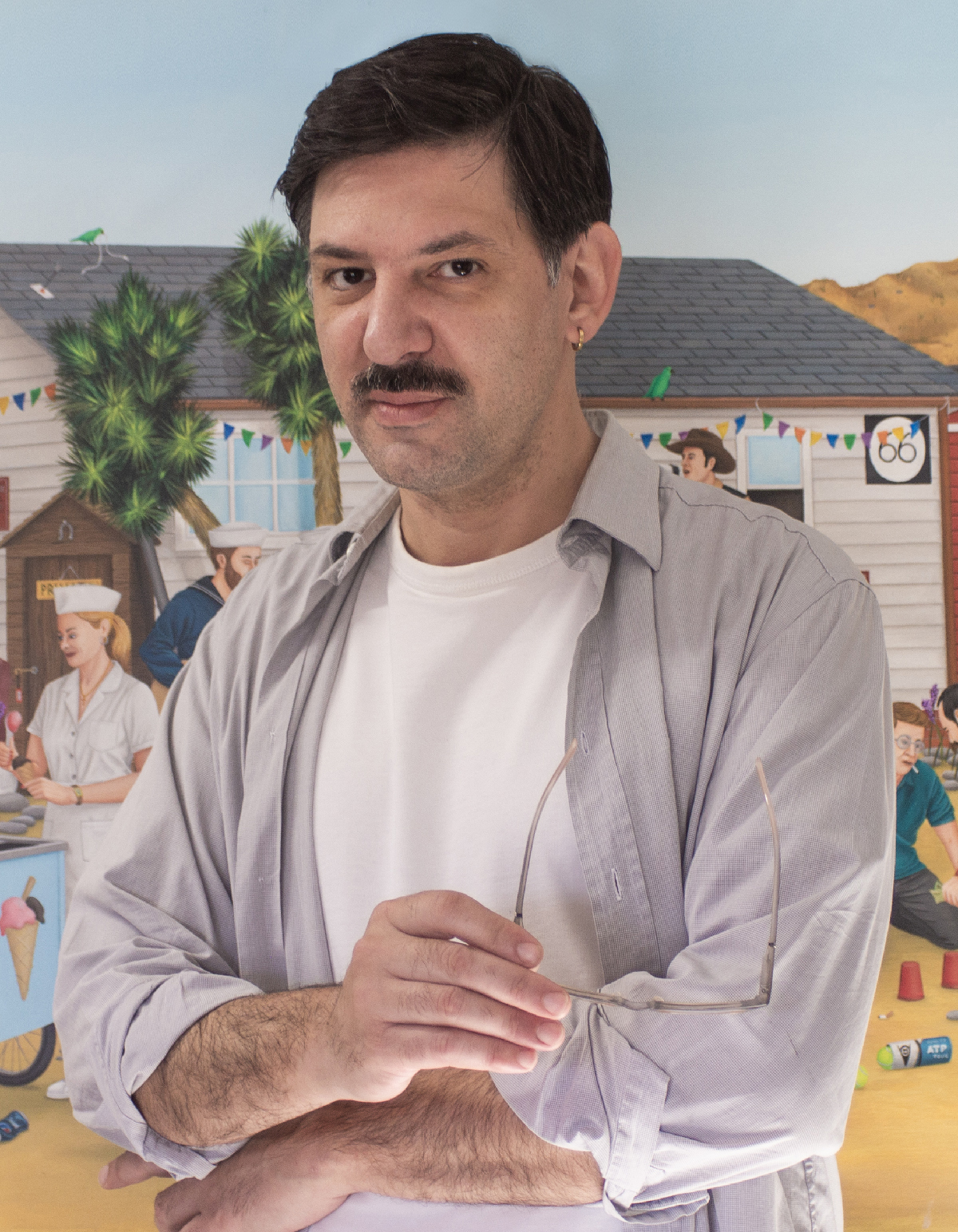
Riccardo Nannini (Italy, 1980) lives and works between Barcelona and Siena. Trained in Industrial Design at the Polytechnic University of Milan, he began an independent artistic path in Barcelona in 2010. Painting soon became his main medium — a way to explore the absurdity of human behavior and the social conventions that shape everyday life.
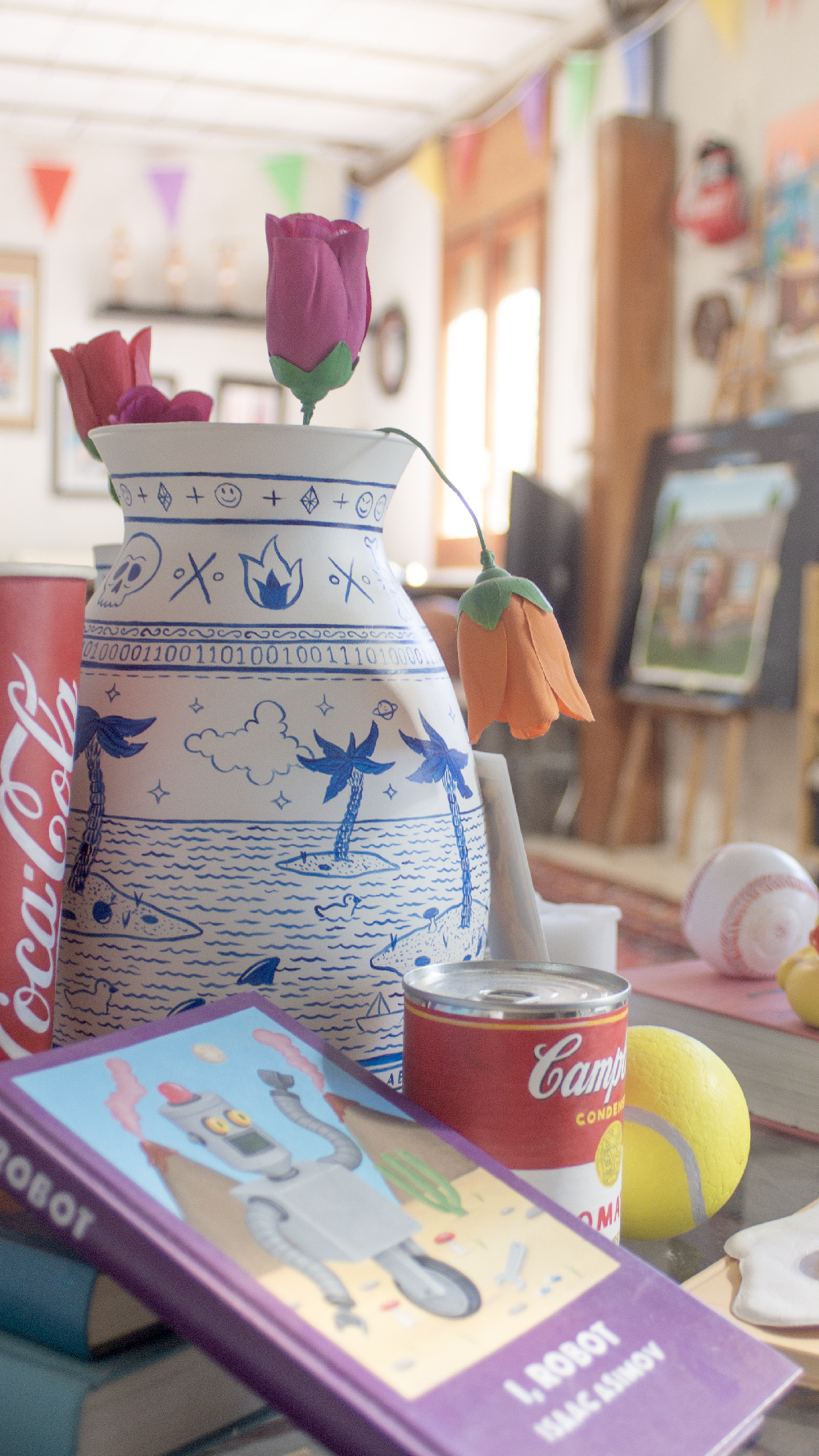
His visual language combines references to Renaissance and Flemish traditions with pop and comic influences, merging irony, color, and social reflection. His work focuses on narrative composition and the expressive value of detail, alternating between large, choral scenes and small serial formats.
He has exhibited widely in Europe and Asia and participated in group shows in the United States and Australia. He collaborates with galleries such as Antonio Colombo Arte Contemporanea (Milan), Galería Víctor Lope (Barcelona), Ting Ting Art Space (Taipei), and Aile Gallery (Seoul), and has taken part in art fairs including VOLTA Basel, Urban Art Fair Paris, Estampa Madrid, ArtVerona and Art Taipei.
PATH AND VISION
Rooted in both design and self-taught practice, Nannini’s painting balances construction and deviation.
Each image begins from an architectural order that soon betrays itself — clarity becomes tension, precision reveals its cracks. The result is a lucid figuration where the ordinary turns theatrical, and stillness replaces action.
His scenes inhabit small stages of everyday life: sidewalks, gardens, thresholds. Flat light, sharp contours, and a saturated yet restrained palette create a deceptive calm. What may appear as control is, instead, a way of listening — distance as a form of attention.
Minor disturbances — animals, misplaced objects, incongruent gestures — shift the meaning of the scene and open a mental off-field where irony and unease coexist. Irony, here, is not detachment but a tool of inquiry, leaving space for doubt.
The roots of this painting lie in a cultivated lineage. From Flemish genre painting Nannini inherits the sense of collectivity and the intelligence of detail as a moral device: as in Bruegel, the canvas holds together the comic and the tragic, the anecdote and the rule. From Spanish costumbrismo comes the measure of the everyday as a social narrative without proclamation; from American regionalism, the idea of the domestic landscape as a mirror of collective identity. To this structure he weaves a porous contemporary visual culture — from comics to advertising, from pop languages to memes — allowing him to handle shared imagery without renouncing pictorial rigor.
Nannini’s painting neither accuses nor consoles: it records. A poised, contemporary figuration that uses beauty as a threshold — the point where clarity begins to doubt itself.